  | In his ‘State of the State’ speech, Gov. Rick Scott takes credit for creating more jobs. But the numbers show that wages fell for the working poor and poverty is still widespread in Florida. COMPILED FROM WIRE AND STAFF REPORTS
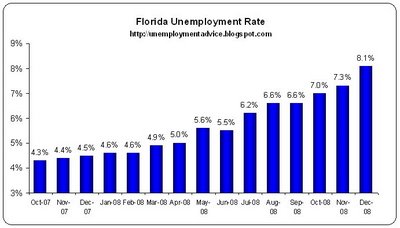
When Rick Scott ran for governor, he vowed to cut state government, corporate income taxes and business regulations. As a result, he promised, Florida would become a corporate-friendly state that would attract new companies and new jobs. He won the election and cut state government, corporate taxes and business regulations. Now he’s one of the most unpopular politicians in the country. A December poll by Public Policy Polling in North Carolina, which works mostly with Democrats, showed his approval rating was 26 percent, the lowest of any governor in the country. This was down from a poll in May by the nonpartisan Quinnipiac University, in Connecticut, showing his approval rating at 29 percent. Scott optimistic about Florida unemployment But Scott says his policies are working. As evidence, he cites a declining unemployment rate and rising job growth. In Monday’s State of the State speech to open the 2011 legislative session, Scott exuded optimism that a turnaround is already under way. "In the past year, Floridians, not government, created almost 135,000 new private sector jobs," Scott said. "We netted more than 120,000 total jobs in the first 11 months of 2011 – the third most of any state in the nation." There were no surprises in Scott’s roughly half-hour speech, with the governor sticking to his yearlong theme of getting the state back to work, and spelling out, as he has in the past, that he wants lawmakers to help him increase education spending and to reduce the cost of auto insurance. Nothing new Union representatives called the governor’s speech "fluff" and "misleading," and missing solutions to the joblessness still faced by the state. "There was nothing in today’s remarks that departs from the same tired old policies that have dominated Florida for the past thirteen years and created the current economic crisis," AFL-CIO President Mike Williams said in the statement. "Missing were any solutions to get the over 1 million Floridians out of work back to earning a paycheck. "Our state is broken; that is the real state of Gov. Rick Scott’s Florida." Is the state broken? A Florida Center for Investigative Reporting (FCIR) examination of data agrees, and reveals that the Scott administration’s claims of jobs success are premature, even inaccurate. According to federal and state labor statistics, government and academic studies, economic forecasts, and interviews with economic analysts – information that has not been widely reported – FCIR has found: • There's no evidence Scott's policies are responsible for any of the new jobs in Florida over the past year; • The jobless rate is falling because so many Floridians have stopped looking for work that they aren't being counted anymore; • Steep cuts in state spending have further squeezed the poor and unemployed, and in turn, the municipalities in which they live; • The majority of new jobs are in the lowest-paying sectors; •Wages have fallen for the poorest workers; • Poverty has increased; • Florida has one of the highest populations of uninsured in the country. Meanwhile, Scott has eliminated the corporate income tax for half the businesses that paid it, and is working on eliminating it for another quarter that still do. He has also rejected federal money to implement a new health care law he is opposed to, in both cases forgoing tens of millions of dollars. "I think it's a matter of priorities," says Laura Goodhue, executive director of Florida CHAIN, a nonprofit, nonpartisan organization in Jupiter that advocates for affordable health care. "There are many corporations in Florida that don't pay taxes. There are a number of revenue opportunities the state is not taking advantage of. We're either funding corporations, or we're funding people." Job creation Scott ran on the promise that he would create 700,000 jobs over seven years above what was forecast. After the election, he backed away from that claim, saying he really meant he would create a flat 700,000 jobs – a number that state economists had already predicted would be created. Scott is also taking credit for what he says is an improving job market in Florida. "We’ve had plenty of success so far," he told supporters recently, referring to a drop in Florida’s unemployment from 12 percent before Scott took office to 10 percent as of November. But those unemployment numbers, released by the U.S. Department of Labor’s Bureau of Labor Statistics, only tell part of the story. They don’t reflect "discouraged workers," people who have not actively sought employment in the previous four weeks, or the underemployed, people who gave up looking for full-time jobs and took part-time jobs instead, or those who have gone back to school. Florida’s unemployment rate for all of these categories together, according to federal calculations, is 18.2 percent unemployment– the eighth highest in the country. That’s lower than 2010’s 19 percent, but less of a decline than the unemployment rate that Scott cites. Low-paying jobs growth Meanwhile, what growth there is has been generated in low-paying jobs, such as in the tourism industry. From July 2010 to July 2011, the largest number of new jobs created in the state came in the leisure and hospitality industry, which pays average annual wages of $21,448. That compares to $41,750 for all Florida industries, according to statistics from the state’s Agency for Workforce Innovation. And the surge in tourism and cleaning jobs doesn’t mean those workers are getting paid any better. The bottom 20 percent of earners in Florida have seen their wages actually drop, according to the FIU study, while they went up modestly for the state’s top 20 percent of earners. Scott can’t take credit for any of those new jobs in Florida, either. The job growth that Scott says shows his policies are putting us on the right track were predicted by state economists in February 2011, a month after Scott took office, as Florida eased out of the recession. As a result of the stagnant economy, and the types of jobs available, Florida’s poverty rate has gone up three years in a row, to 16 percent in 2010, according to the U.S. Census Bureau. The number of uninsured in Florida, 22.4 percent, is the highest in the nation. State cuts In May 2011, Scott balanced Florida’s $69 billion budget, as the law required, and closed a $3.6 billion deficit. The state cut 6,200 jobs, according to federal job statistics. But the elimination of all those state employees from the payroll was not a net savings for taxpayers. In many cases, costs and responsibilities were simply pushed onto smaller governments. Florida has the lowest ratio of state government employees to residents in the country: 99 state workers per 10,000 residents, compared to a national average of 178 per 10,000 residents, according to the latest figures released by the state’s Division of Human Resources Management. Those workers cost the least in the nation – $38 per resident compared to a national average of about $75. So there wasn’t a lot of fat to trim. Cutting the state’s ability to provide services may just have passed the buck to hard-hit urban areas. Florida has 10 percent of the country’s homeless population, according to the U.S. Department of Housing and Urban Development. In January 2011, Florida claimed one-third of all U.S. homeless who didn’t have any shelter. For instance, Tampa saw state funding for housing assistance drop from $3 million in 2008 to $0 in 2011. It’s happening all over the state. Following bleak poll numbers this summer, Scott shuffled some staff and began a public relations campaign to soften his image. In his speech on Monday, he vowed to increase money for schools. To pay for the school funding in his budget, he’s targeting Medicaid, the health care program for low-income families. And government workers? He’d like to cut another 4,500 jobs. |
